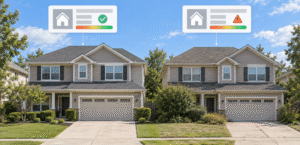

As appraisal reports become more structured and data-driven, the opportunity is not simply to review faster. It is to focus review resources where they add the most value.
The mortgage industry has spent years preparing for Uniform Appraisal Dataset (UAD) 3.6, and November 2, 2026 marks an important point in that transition. Beginning on that date, new appraisal reports submitted to the Uniform Collateral Data Portal® (UCDP®) must use UAD 3.6 unless a lender is operating under a temporary policy exception from the applicable government-sponsored enterprise (GSE).
The November deadline is important, but implementation is only part of the story. UAD 3.6 also creates an opportunity to reconsider how appraisal review is handled once that richer data reaches the lender. The GSEs are moving from a collection of legacy appraisal forms to a more data-driven, flexible, and dynamic reporting structure aligned with MISMO® Reference Model 3.6. That creates a useful question for collateral risk teams: if appraisal information is becoming more structured, should the way organizations review it evolve as well?
A Better Review Strategy Starts with Prioritization
UAD 3.6 is intended to improve appraisal reporting and review, not simply digitize the old forms. A more structured dataset gives systems more information to evaluate consistently, but it does not remove the need for collateral judgment. Reviewers still have to determine whether the appraisal is credible, whether reported property information is consistent with other available information, whether comparable sales and adjustments warrant closer examination, and whether the value conclusion is adequately supported.
The opportunity is to avoid treating every appraisal as if it requires the same level of attention. A relatively straightforward file with few material concerns should not necessarily consume the same review resources as one with significant discrepancies or higher-risk findings. Risk-based review allows every appraisal to receive a consistent initial assessment while helping teams direct deeper human review to the files that warrant it most.
Where VeroSCORE Fits
VeroSCORE™ is designed to support that approach by automatically analyzing appraisal information using multiple data sources, including public records, multiple listing service (MLS) data, Veros’ VeroVALUE® automated valuation model and other analytics. It performs address and appraiser-license validations and UAD compliance checks, while its proprietary rules engine processes thousands of appraisal data points to surface potential areas of concern. The current VeroSCORE platform supports both UAD 2.6 and UAD 3.6.
VeroSCORE has also been used in government appraisal review environments. It has served as an appraisal review tool for the Department of Veterans Affairs (VA) and is used for appraisal reviews by Federal Housing Administration (FHA)/U.S. Department of Housing and Urban Development (HUD) Home Ownership Centers. This experience demonstrates that automated appraisal scoring can be incorporated into established appraisal review workflows.
For UAD 3.6, Veros expanded the review experience to take advantage of the new appraisal structure. Subject and comparable property characteristics can be displayed alongside public-record and MLS information to help expose significant discrepancies. VeroSCORE evaluates the top 20 comparable sales based on the appraisal’s effective date, alongside the comparables chosen by the appraiser. It assigns severity levels to findings and allows organizations to apply their own business rules independently of VeroSCORE’s core rules and scoring.
Automated appraisal triage can significantly accelerate the review process, but its value goes beyond speed. It also helps organizations prioritize. Lenders can establish workflows around identified appraisal risk so underwriting or review staff can concentrate on higher-risk exceptions. Appraisal firms and appraisal management companies (AMCs) can also use the technology earlier in the process to identify potential issues before an appraisal reaches the lender.
That approach is already part of Valligent’s appraisal review process. “VeroSCORE has become an essential part of our appraisal review process and our goal of achieving a one-touch audit. It helps our team identify UAD 3.6 compliance issues, quality concerns, and data inconsistencies before submission, helping reduce revisions and improve turn times. Our clients have also reported fewer underwriting concerns and revision requests, reinforcing what we’ve seen internally: greater confidence in appraisal quality and a smoother experience for both lenders and appraisers,” said George Paquette, Chief Operating Officer, Valligent.
Why Earlier Visibility Matters
When a material concern is identified earlier, the organization has more opportunity to investigate it while the appraisal is still close to its source. A discrepancy discovered later may require additional information, a correction, or another pass-through part of the workflow. The exact impact will vary by lender and circumstance, but the principle is straightforward: earlier visibility gives teams more options to address an issue before it moves farther downstream.
That is particularly relevant during the UAD 3.6 transition. The November 2 mandate remains in place, but lenders operating under an approved temporary policy exception may continue submitting UAD 2.6 appraisal reports through May 19, 2027. Organizations may therefore encounter both standards during the transition period. A review platform that supports both UAD 2.6 and UAD 3.6 can help provide continuity while teams adapt to the new reporting structure.
Automation Still Needs Judgment
Risk-based review does not mean an automated score becomes the final word on an appraisal. Real estate is contextual: properties can be unusual, markets can behave differently even within the same metropolitan area, data sources can disagree, and comparable selection can require professional judgment. The stronger use of automation is to systematically compare information, apply rules and surface exceptions so experienced human reviewers can spend their time evaluating the situations where context matters most.
The Opportunity Beyond the Deadline
The immediate industry focus is understandably on implementation. Systems need to work, appraisal files need to be accepted, and teams need to understand the redesigned report. But the longer-term opportunity is broader than getting through a transition date.
UAD 3.6 gives the industry a more structured foundation for appraisal information. That creates an opportunity to reconsider review workflows that were built around older forms and older processes. The goal should not be more automation for its own sake. It should be a review process that identifies meaningful risk consistently and applies human expertise where it is most useful.
VeroSCORE for UAD 3.6 is designed to support that approach by automating appraisal risk analysis, prioritizing findings, and helping lenders, AMCs and appraisal firms establish workflows based on identified appraisal risk.