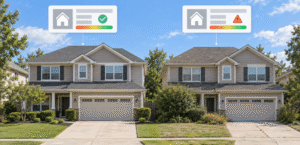


Your portfolio might look healthy on paper, but the current 6 to 6.3 percent floor for 30-year fixed mortgage rates [1] demands a reality check. The equity buffers underwritten just two quarters ago are actively eroding month-to-month. Setting and forgetting property valuations means managing phantom equity. Treating collateral review as a passive exercise has escalated from a back-office task into a front-line fiduciary risk.
Bottleneck in Portfolio Reviews
Manual portfolio reviews consume significant time for Mortgage Investment Corporations and Real Estate Investment Trusts. Analysts frequently rely on outdated Broker Price Opinions or drive-by inspections. These traditional methods often miss some of the hyper-local shifts in residential property values, creating a dangerous valuation lag.
Rising Buyback Risk and the Expense of Inaction
Wall Street investors are becoming highly valuation sensitive. Secondary market buyers will not purchase a pool of loans if they suspect that there is any potential that a local appraiser inflated home values. Recent reports from Fitch Ratings in March 2026 show a small uptick in delinquencies for the 2024 and 2025 loan vintages [2].
Furthermore, Non-Qualified Mortgage volume is projected to account for 15 percent of all originations this year, propelled by a labor force in which nearly 35 percent of workers identify as non-traditional [3]. Since these borrowers do not fit the traditional lending box, lenders must apply a strict collateral review to verify the ability to repay and protect against buyback risk.
The financial penalty of a single loan buyback easily wipes out the profit margin of an entire loan pool. Repurchasing a defective asset forces a lender to lock up hundreds of thousands of dollars in immediate liquidity, along with the administrative drain of legal reviews and secondary-market negotiations. When contrasted with these severe capital hits, the minimal cost of running a proactive batch portfolio analysis can yield an undeniable return on investment.
Regulatory Push for Modernization
Regulatory changes are also forcing a change in how portfolios are managed. On March 13, 2026, President Trump signed Executive Order 14393, Promoting Access to Mortgage Credit [4]. This directive instructs federal banking regulators to modernize appraisal regulations and expand the use of alternative valuation models and artificial intelligence valuation tools to lower consumer costs. For institutional private lenders, this serves as a definitive signal to upgrade legacy processes and abandon slower, and often more expensive, valuation methods.
Automated Portfolio Analysis
VeroVALUE Portfolio Analysis delivers a direct solution to the valuation lag problem. The solution provides a fast mark-to-market for an entire mortgage asset pool. By comparing loans against the most recent 2026 property sales data, VeroVALUE delivers a defensible, real-time equity position for the real estate assets held. This allows private credit fund managers to meet transparency mandates by providing a batch-processed portfolio analysis in a single afternoon.
Proactive Stakeholder Management
Upgrading the valuation process fundamentally changes the dynamic with stakeholders. Instead of holding defensive meetings with worried investors or regulators, portfolio managers can deliver proactive, data-backed reports. These reports prove that Loan-to-Value ratios are grounded in existing market realities rather than historical hope.
Stop relying on stale property valuations. Contact the Veros team today to request a sample portfolio risk report on your loan types.