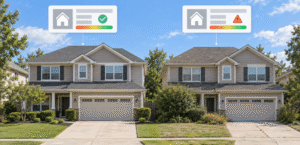


Generally, RiskWire: On the House focuses on the forces shaping the housing market such as supply & demand, or home prices around the country. However, in episode seven, Veros’ Chief Economist, Eric Fox, and Sr. Research Economist, Reena Agrawal, explore a different topic – Automated Valuation Models (AVMs).
To start, they explain exactly what AVMs are, as well as how these models work behind the scenes. Then, branching off this, they discuss the various applications, as well as what AVMs will look like as we move forward.
Here are a few highlights from the episode:
- Automated Valuation Models are computer models that use extensive amounts of data to instantly estimate the value of a property.
- Not all AVMs are created equally – it depends on the application they are being used for. For example, accuracy is more crucial in a scenario in which large financial institutions are relying on an AVM estimate (Industry Grade) compared to a consumer grade application, like Zillow or Redfin’s estimates.
- Fox predicts that the future of AVMs will be characterized by increased speed, AI integration, such as analyzing property photos for condition, and expanded use cases, such as in loan origination.
Interested in a deeper dive into AVMs? Listen to episode seven, today: Webcast & Interviews – RiskWire, powered by Veros
Also, do not forget to check out RiskWire: On the House on Apple Podcasts, Spotify, and YouTube Podcasts.